
Te Ako Manaaki
The Framework
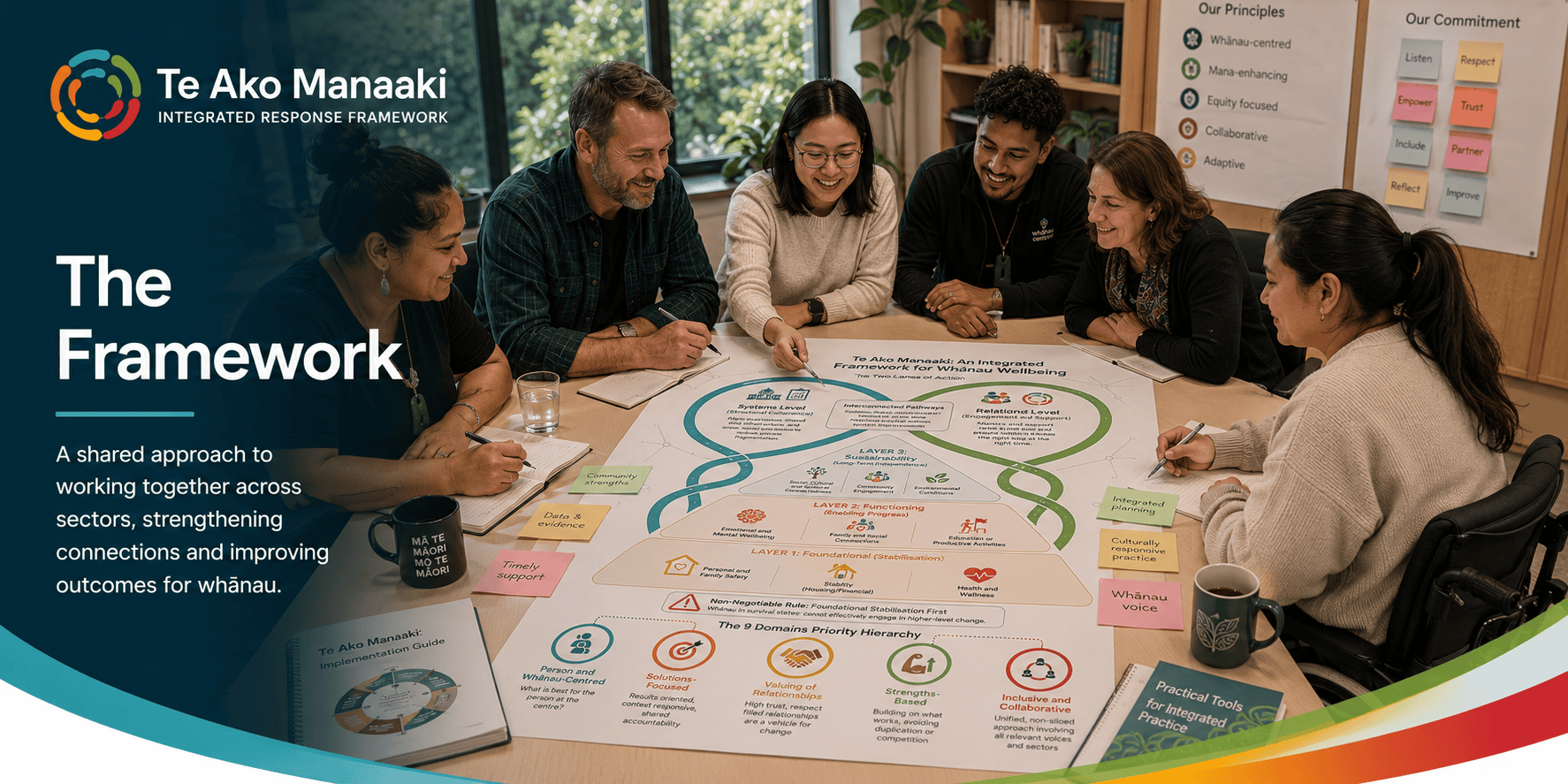
A shared approach to working together across sectors, strengthening relationships, aligning systems and improving outcomes for people and whānau.
A practical response to complexity
Seeing the whole picture and acting together
Complex challenges rarely sit within one service, profession or agency. Te Ako Manaaki gives partners a shared way to understand what is happening, identify what matters most and coordinate action around the person or whānau at the centre.
The framework links systems-level coordination with relationship-based support and recognises that safety and stability must be strengthened before higher-level change can be sustained.
The complete framework
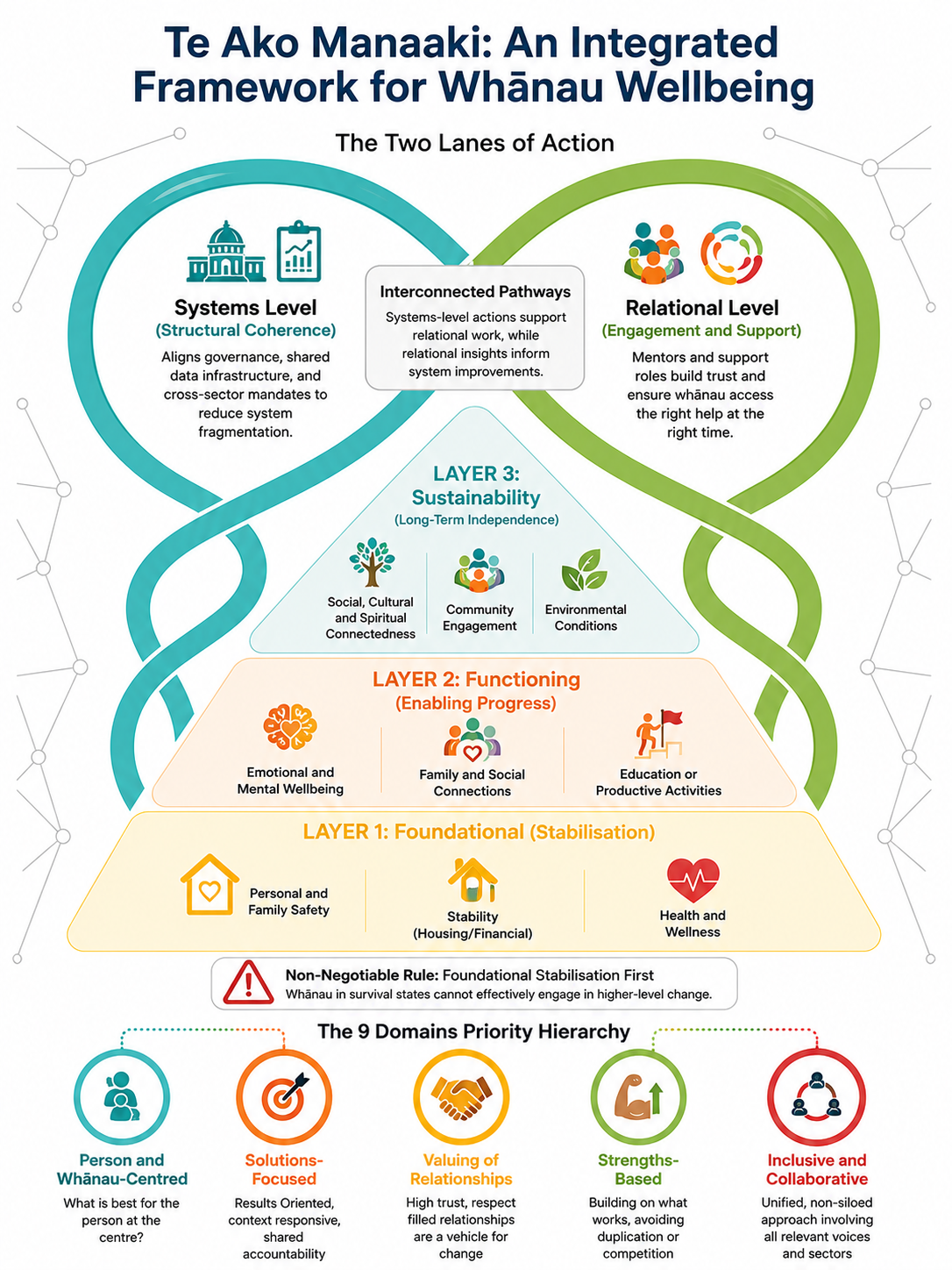
Te Ako Manaaki: An Integrated Framework for Whānau Wellbeing
View the framework below, open the full-size image, or download a printable copy for workshops, planning sessions and collaborative practice.
How the framework is structured
Two connected lanes of action
Systems level
Aligns governance, shared data infrastructure, pathways and cross-sector mandates so that the wider system becomes more coherent and less fragmented.
Relational level
Builds trust, engagement and continuity through people who can walk alongside whānau and connect them to the right support at the right time.
Interconnected pathways
Systems action enables relational practice, while insights from practice and whānau experience inform system improvement.
The Integrated Response Framework
Nine domains for understanding the whole picture
The nine domains provide a shared way to understand what is happening around a person or whānau, identify what matters most, and build a coordinated response across services and systems.
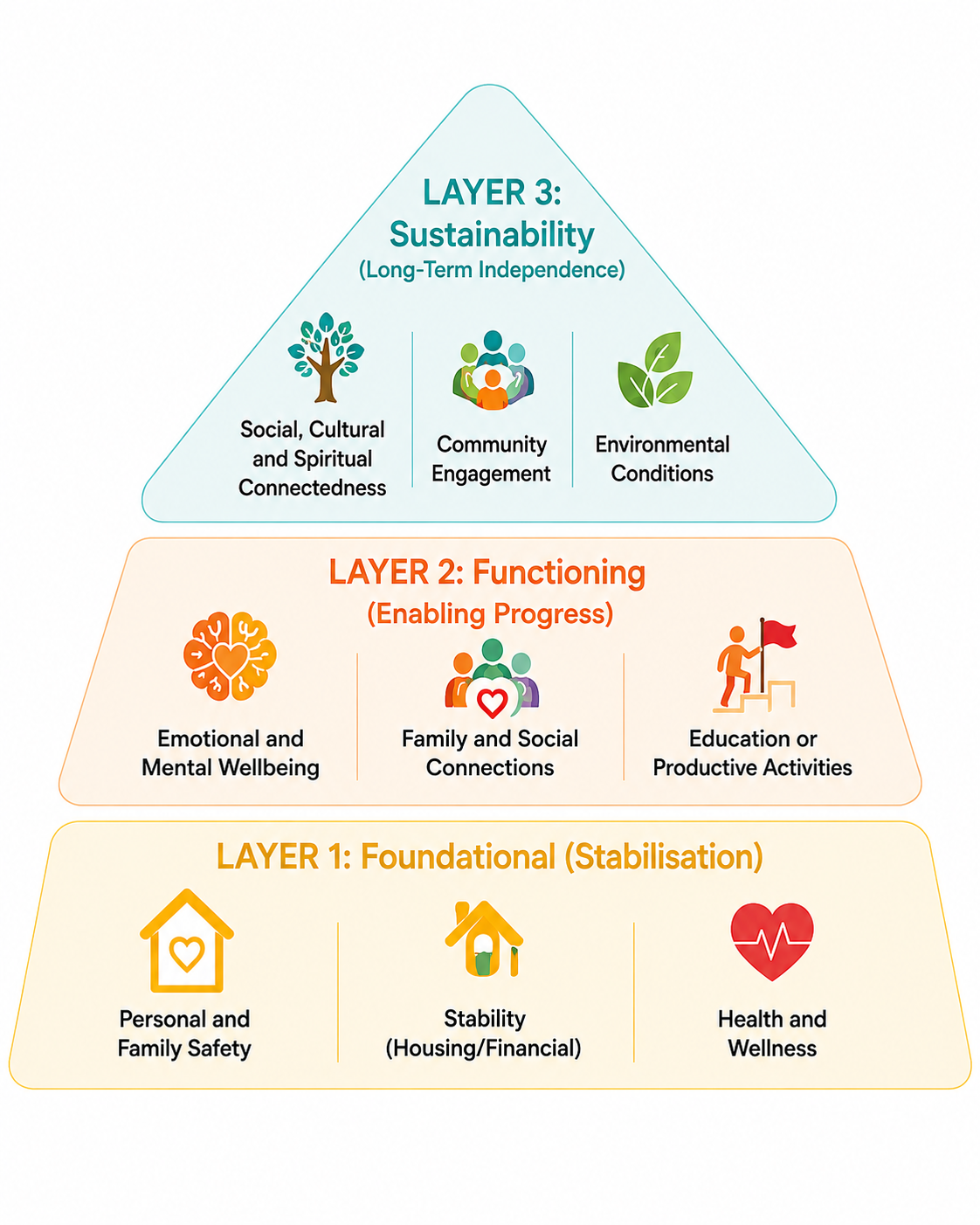
The wellbeing hierarchy
Stabilisation before higher-level change
The framework recognises that people and whānau in survival states cannot effectively engage in higher-level change. Foundational conditions must be addressed first.
Layer 1: Foundational stabilisation
Personal and family safety, housing and financial stability, health and wellness.
Layer 2: Functioning
Emotional and mental wellbeing, family and social connections, education or productive activity.
Layer 3: Sustainability
Social, cultural and spiritual connectedness, community engagement and environmental conditions.
Principles for practice
Five disciplines that keep the work aligned
Person and whānau-centred
What is best for the person at the centre?
Solutions-focused
Context-responsive action and shared accountability.
Valuing relationships
Trust and respect as vehicles for change.
Strengths-based
Building on what works and avoiding duplication.
Inclusive and collaborative
A unified approach involving all relevant voices.
Using the framework
Use it to understand, align, act and learn
Te Ako Manaaki can support strategic planning, case coordination, service design, pathway development, implementation and evaluation across complex operating environments.
Work with Te Ako Manaaki
Interested in applying the framework in your organisation or community?
We work with government, iwi, funders, organisations and practitioners to support implementation, evaluation and collaborative system development.

